Introduction
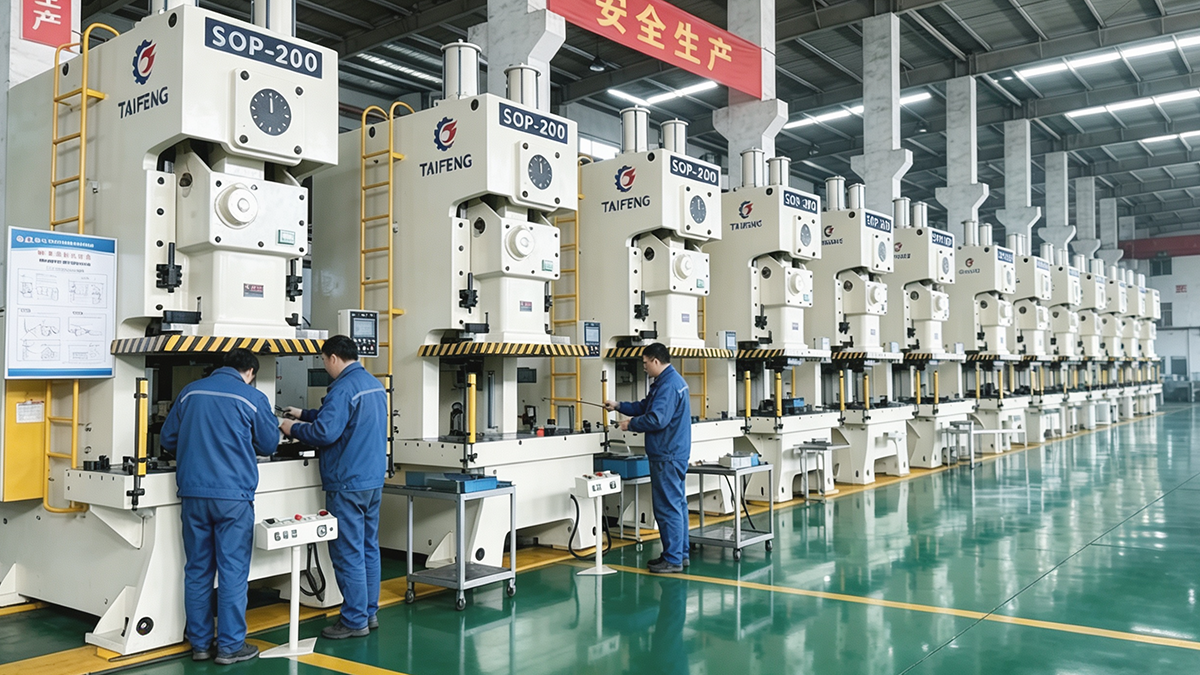
Vietnam's manufacturing sector is booming.
Behind every one of these industries is metal stamping — the process that turns flat steel and aluminum into brackets, housings, connectors, panels, and hundreds of other components. And behind every stamping operation is a stamping press.
For decades, Vietnamese manufacturers sourced presses primarily from Japan (Aida, Komatsu, Chin Fong) and Taiwan (Chin Fong, Ying Han). These brands delivered proven quality — but at premium prices and long lead times.
Today, a significant shift is underway. Chinese stamping press manufacturers are rapidly gaining market share in Vietnam, and the reasons go far beyond just lower prices. This article examines why — and how to choose the right stamping press solutions for your Vietnam factory.
Vietnam's Stamping Press Market: The Numbers
| Indicator | Data |
|---|---|
| Vietnam's manufacturing GDP growth (2024–2026) | 8–10% annually |
| Estimated annual stamping press demand | 2,000–3,000 units |
| Traditional market leaders (by installed base) | Japan (40%), Taiwan (30%), China (15%), Korea (10%) |
| China's market share trend (2020→2026) | 8% → 25%+ (and growing fast) |
| Average press price (China origin, 60–110 ton) | $15,000–$35,000 |
| Average press price (Japan origin, same specs) | $40,000–$80,000 |
The numbers tell a clear story: Chinese manufacturers are winning orders that previously went to Japanese and Taiwanese brands — and the trend is accelerating.
The Five Key Reasons Vietnamese Factories Are Switching
1. Significant Cost Savings Without Quality Sacrifice
This is the most obvious reason, but the real story is more nuanced than "China is cheaper."
Price comparison for a typical 80-ton straight side press (JIS Class 1):
| Origin | Price (FOB) | Delivery to Vietnam | Total Landed Cost |
|---|---|---|---|
| China | $30,000–$45,000 | $800–$1,500 (3–7 days) | $31,000–$46,500 |
| Taiwan | $50,000–$70,000 | $1,000–$2,000 (5–10 days) | $51,000–$72,000 |
| Japan | $70,000–$120,000 | $1,500–$3,000 (7–14 days) | $71,500–$123,000 |
The savings are 40–65% compared to Japanese presses and 25–40% compared to Taiwanese — for machines with comparable accuracy specifications.
But the real question is: has Chinese quality improved enough to justify the switch?
The answer, for leading Chinese manufacturers, is yes. Here's why:
- Precision class: Top Chinese manufacturers now produce presses certified to JIS B 6402 Class 1 (and Special Class for servo presses) — the same standard as Japanese machines
- Component quality: Chinese manufacturers increasingly use the same bearings (NSK, SKF), electrical components (Siemens, Mitsubishi), and control systems (Omron, Mitsubishi) as Japanese manufacturers
- Frame materials: High-grade cast iron (FC300) or welded steel (Q345B) with proper stress relief — matching material standards
- Accuracy verification: Reputable manufacturers provide individual machine accuracy test reports measured with calibrated instruments
The gap between "best Chinese" and "Japanese quality" has narrowed to less than 10% in performance — while the price gap remains 40–65%.
2. Unmatched Delivery Speed
For Vietnamese manufacturers expanding production capacity, time-to-market is critical. Every month waiting for a new press is lost production revenue.
| Origin | Typical Lead Time |
|---|---|
| China (standard models) | 30–45 days |
| China (custom configuration) | 45–75 days |
| Taiwan | 60–90 days |
| Japan | 90–180 days |
| Germany | 120–240 days |
Chinese manufacturers deliver 2–4× faster than Japanese competitors. For a Vietnamese factory with an urgent production expansion, this speed difference can be worth more than the price difference itself.
Why is China so fast?
- Large production capacity with ready inventory of standard models
- Shorter domestic supply chain for components (motors, controls, bearings all sourced domestically)
- Flexible production scheduling — smaller manufacturers can prioritize urgent orders
- Proximity to Vietnam — 3–7 days sea freight vs 7–14+ days from Japan
3. Geographic Proximity and Trade Partnership
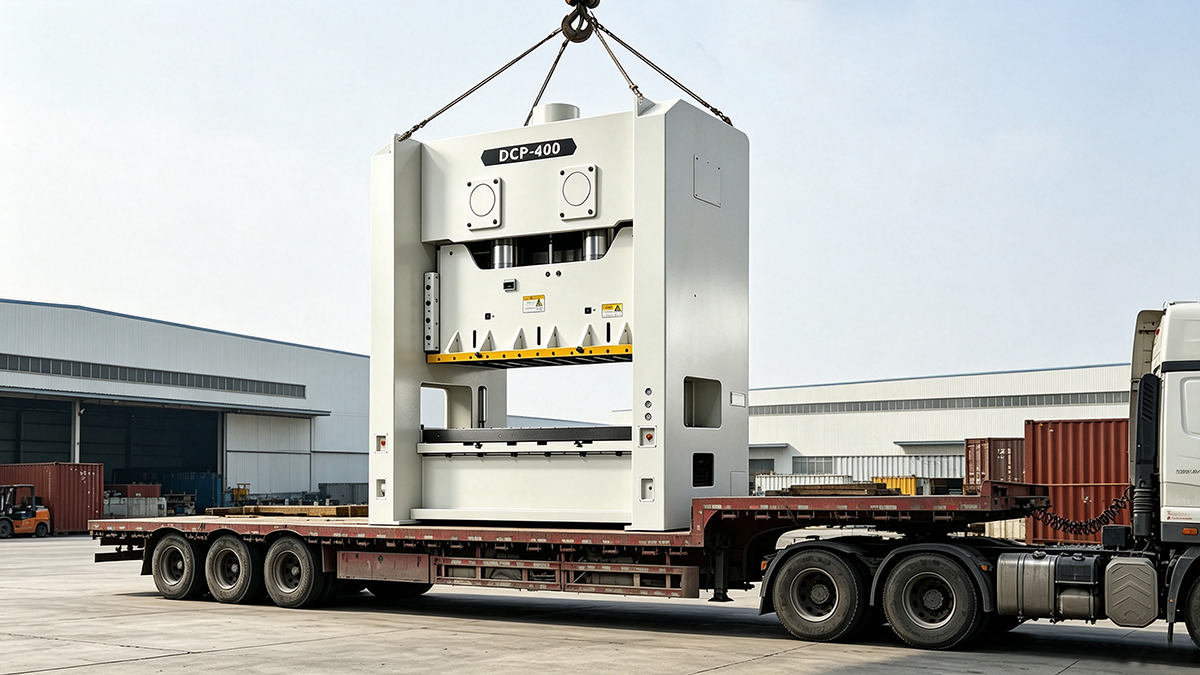
Vietnam and China share a land border of 1,281 km
Logistics advantages:
- Sea freight: Ho Chi Minh City is 3–5 days from Guangdong, Hai Phong is 2–3 days from Guangxi
- Land transport: For factories in northern Vietnam, presses can be trucked directly from Guangxi — no sea freight needed
- Container availability: High-frequency shipping on the China-Vietnam route means containers are always available
- Customs: Vietnam-China trade is well-established with streamlined customs procedures under ASEAN-China Free Trade Agreement (ACFTA)
Import duty note: Stamping presses imported from China to Vietnam currently face 0–5% import duty under ACFTA preferential tariff rates (depending on HS code classification). This is lower than the MFN rate, giving China an additional cost advantage.
4. Customization and Flexibility
Vietnamese manufacturers often have specific requirements that don't fit standard catalog models:
| Vietnamese Market Need | How Chinese Manufacturers Respond |
|---|---|
| Voltage: 380V/50Hz 3-phase | All Chinese manufacturers build for this as standard |
| High humidity, tropical conditions | Electrical panels with dehumidifiers, corrosion-resistant coatings |
| Diverse product lines on shared equipment | Ready customization of stroke, speed, bed size, and controls |
| Dies from Japan/Taiwan/Korea | Presses accept standard die set dimensions (MIS, ISO) |
| Budget constraints (SMEs) | Tiered product lines — from value to premium |
| Training needs | Installation + training services, often with Vietnamese-speaking staff |
Specific customization examples from Vietnamese market:
- A Hai Phong electronics factory needed a 60-ton press with extended stroke (250 mm) for deep-drawn connector housings — Chinese manufacturer delivered in 50 days, Japanese manufacturer quoted 150 days
- A Binh Duong motorcycle parts supplier needed left-hand configuration (controls on opposite side) to fit their existing factory layout — Chinese manufacturer adjusted at no extra cost
- A Da Nang appliance manufacturer needed dual-voltage capability (380V for main factory, 220V for satellite workshop) — Chinese manufacturer built a custom electrical system
5. Growing After-Sales Support Infrastructure
The historical weakness of Chinese manufacturers in Vietnam was after-sales service. That is changing rapidly:
- Local agents and distributors: Major Chinese press brands now have authorized agents in Hanoi, Ho Chi Minh City, and Da Nang
- Spare parts inventory: Several Chinese manufacturers maintain spare parts warehouses in Vietnam, enabling 1–3 day delivery of critical components
- Remote diagnostics: Modern Chinese presses with network connectivity enable remote troubleshooting by factory engineers in China
- Video call support: 24/7 technical support via Zalo, WeChat, or WhatsApp with screen-sharing and real-time guidance
- On-site service: Chinese manufacturers dispatch service engineers to Vietnam within 3–7 days for critical issues
- Training programs: Comprehensive operator and maintenance training — either at the Vietnamese factory or at the Chinese manufacturer's facility
Real-World Comparison: Vietnamese Factory Case Study
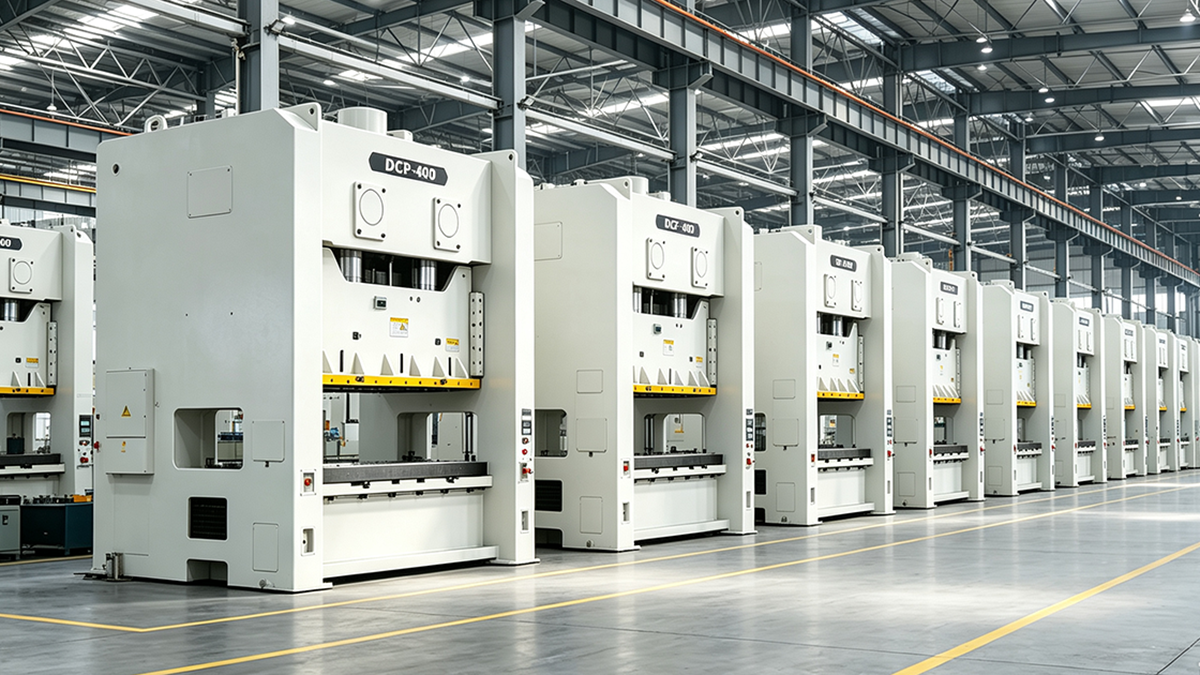
Company: Medium-sized automotive component manufacturer in Binh Duong Province
Application: Stamping brackets and small panels for Japanese automotive OEM supply chain
Previous equipment: 2× Aida 80-ton presses (purchased 2015, ~$90,000 each)
2025 expansion requirement: 3 additional press lines for new product launch
| Criteria | Japanese Quote | Chinese Quote (Taifeng) |
|---|---|---|
| Press model | Aida NC1-80 (80-ton) | TF-80S (80-ton straight side) |
| Precision class | JIS Class 1 | JIS Class 1 |
| Price per unit | $85,000 | $38,000 |
| 3 units total | $255,000 | $114,000 |
| Lead time | 120 days | 55 days |
| Warranty | 12 months | 12 months |
| Spare parts (starter kit) | $2,000 per unit | $1,500 per unit |
| Total investment (3 units) | $261,000 | $118,500 |
Result: The factory purchased 3 Chinese presses, saving $142,500 (55%). The savings were redirected to purchase a higher-quality progressive die set — which directly improved part quality and reduced per-part cost.
After 12 months of operation:
- Press accuracy maintained within JIS Class 1 specification
- Zero unplanned breakdowns
- OEM audit passed with no press-related findings
- Total cost of ownership (including maintenance) was 48% lower than equivalent Japanese equipment
Addressing Common Concerns
"Chinese presses don't last as long"
Reality: Press lifespan depends on maintenance, not origin. A well-maintained Chinese press will run for 15–20 years. A poorly maintained Japanese press will fail in 5. The maintenance checklist and lubrication schedule matter far more than the country of origin.
Evidence: Chinese presses installed in Vietnam during 2010–2015 are still running in production today — 10–15 years of continuous operation with proper maintenance.
"Chinese quality control is inconsistent"
Reality: This was true 15 years ago. Today, leading Chinese manufacturers have:
- ISO 9001 certified quality management systems
- CMM (coordinate measuring machine) inspection for critical components
- 100% accuracy testing before shipment
- Material traceability (mill certificates for all major castings and forgings)
The key is choosing a manufacturer with proven export experience and verifiable certifications — not the cheapest option on Alibaba.
"Spare parts will be hard to get"
Reality: Modern Chinese presses use internationally standard components — NSK/SKF bearings, Siemens/Mitsubishi electrical parts, standard O-rings and seals. Most wear parts can be sourced locally in Vietnam or from the manufacturer's Vietnam warehouse.
"My Japanese dies won't fit a Chinese press"
Reality: Dies are designed to fit standard die set dimensions (bolster size, shut height, slide adjustment range) — not specific press brands. A Chinese press with the correct bed size, stroke, and die height range will accept any properly designed die set.
Always provide your die dimensions when requesting a press quotation to verify compatibility.
How to Choose the Right Chinese Manufacturer in Vietnam
Not all Chinese manufacturers are equal. Use these criteria:
Must-Have Criteria
- ✅ Factory-verified: Visit the factory in person or via live video tour
- ✅ Export experience: Minimum 5 years of export to Southeast Asia
- ✅ Vietnam references: At least 3–5 existing customers in Vietnam (ask for contact details)
- ✅ JIS accuracy certification: Individual machine test report, not just general spec sheet
- ✅ ISO 9001 certified: Quality management system in place
- ✅ CE or relevant certification: Required for many end-customer audits
- ✅ Spare parts plan: Clear commitment on availability and delivery time
- ✅ Warranty terms: Written warranty with specific coverage and claim process
Vietnam Market: Most Popular Press Models
| Application | Popular Tonnage | Press Type | Monthly Demand (est.) |
|---|---|---|---|
| Electronics components | 25–60 ton | C-frame or high-speed | 80–120 units |
| Motorcycle parts | 45–110 ton | C-frame / straight side | 50–80 units |
| Automotive components | 80–250 ton | Straight side | 30–60 units |
| Home appliances | 60–160 ton | Straight side | 40–70 units |
| Hardware / fasteners | 25–80 ton | C-frame | 60–100 units |
| EV motor lamination | 60–150 ton | High-speed / servo | 10–20 units (growing fast) |
Taifeng Machinery: Your Stamping Press Partner in Vietnam
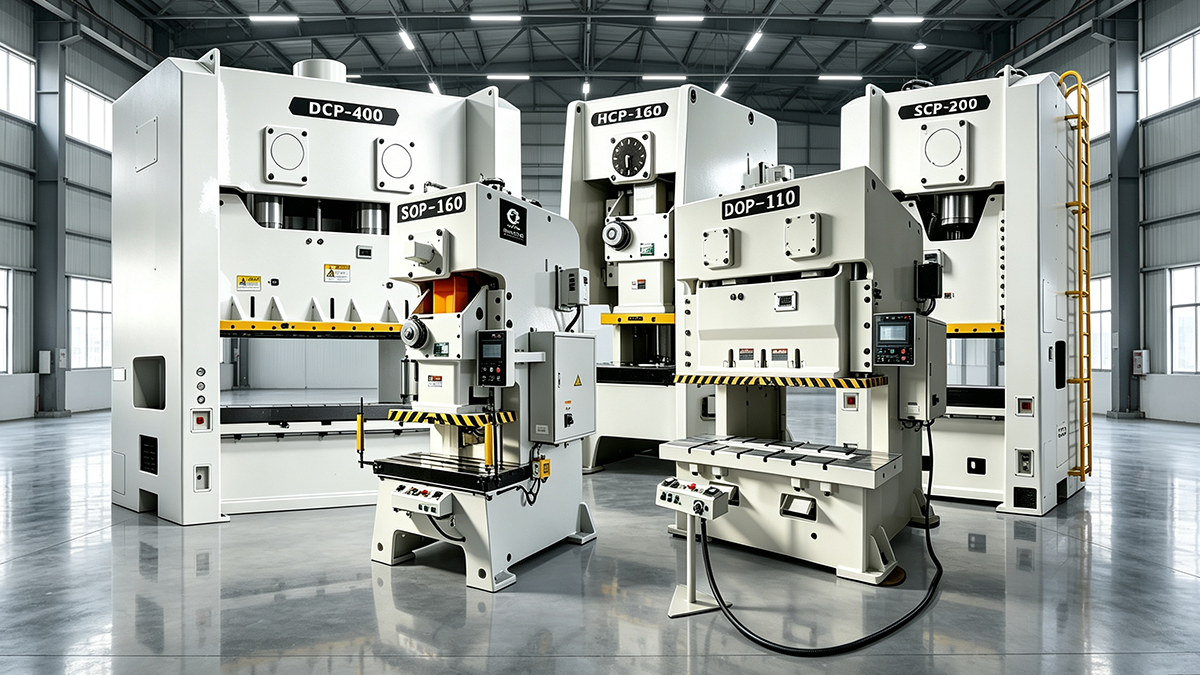
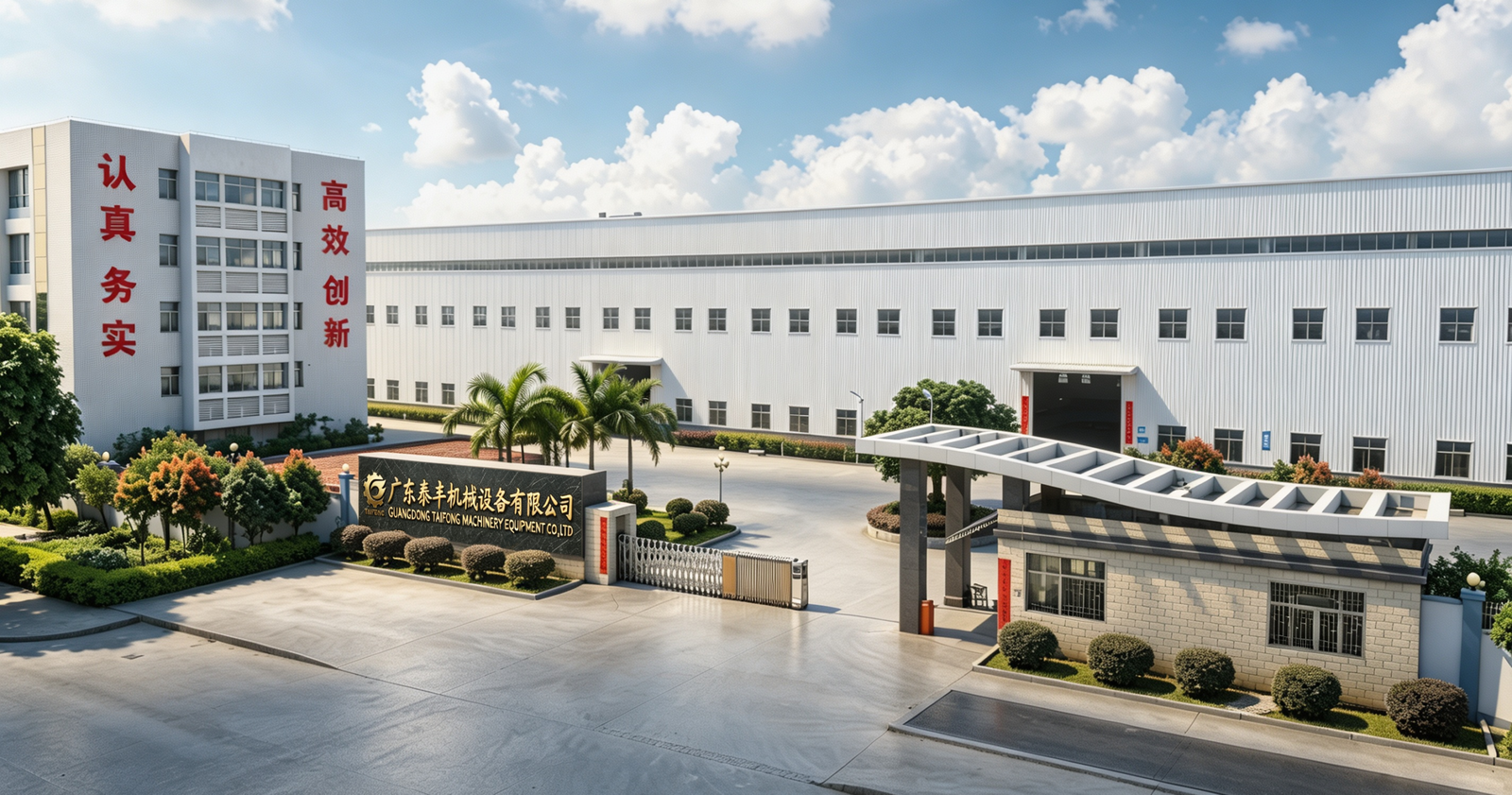
Taifeng Machinery has been serving Vietnamese manufacturers since 2012, with a growing installed base across Ho Chi Minh City, Hanoi, Binh Duong, Da Nang, Hai Phong, and other industrial centers.
Why Vietnamese manufacturers choose Taifeng:
- ✅ JIS Class 1 precision — certified test reports with every machine
- ✅ 30–55 day delivery to Vietnam ports
- ✅ Competitive pricing — 40–60% less than Japanese brands for equivalent specifications
- ✅ Vietnamese market experience — 380V/50Hz standard, tropical climate adaptations
- ✅ Spare parts support — critical parts stocked, 3–7 day delivery to Vietnam
- ✅ On-site installation and training — our engineers come to your factory
- ✅ Complete line solutions — press + uncoiler + leveler + servo feeder as integrated package
- ✅ Existing Vietnamese customers — references available upon request
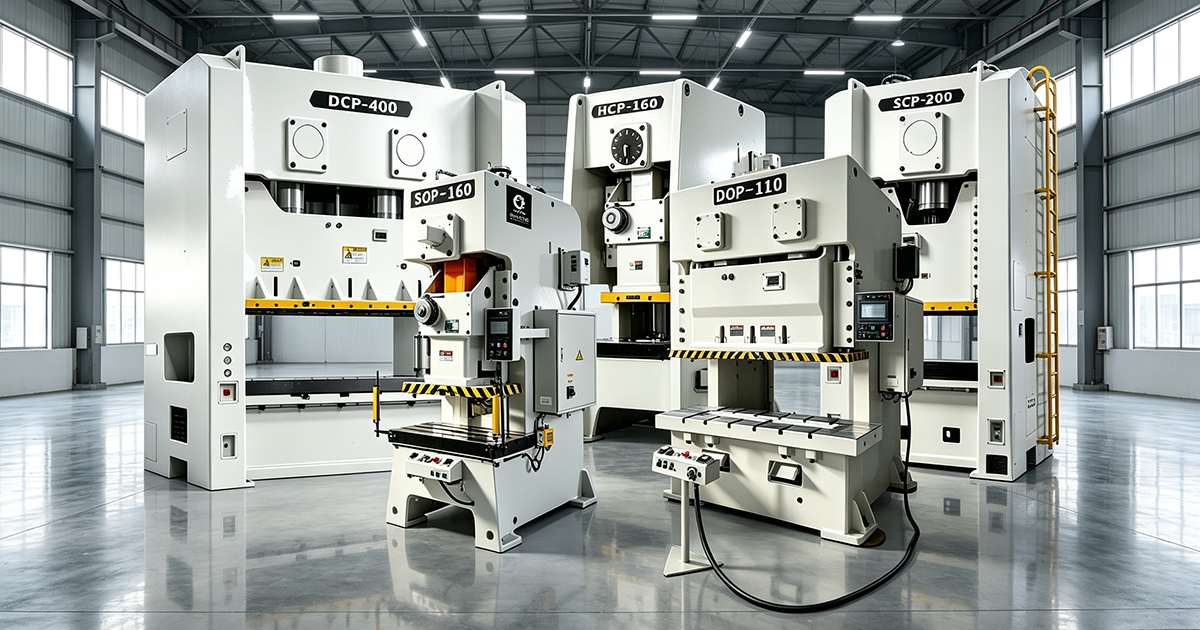
Explore our complete product range — from 25-ton C-frame presses to 600-ton straight side double crank presses, all available for fast delivery to Vietnam.