Introduction
Choosing between a progressive die and a transfer die is one of the most consequential decisions in metal stamping production. Each method has distinct advantages in speed, cost, part complexity, and flexibility — and the wrong choice can cost you months in lost efficiency or wasted tooling investment.
This guide compares both stamping methods across every key dimension so you can match the die type to your actual production requirements. Whether you're running high-volume connector terminals or deep-drawn automotive housings, understanding these differences will save you time and money. If you need further guidance, explore our stamping press solutions for industry-specific recommendations.
What Is a Progressive Die?
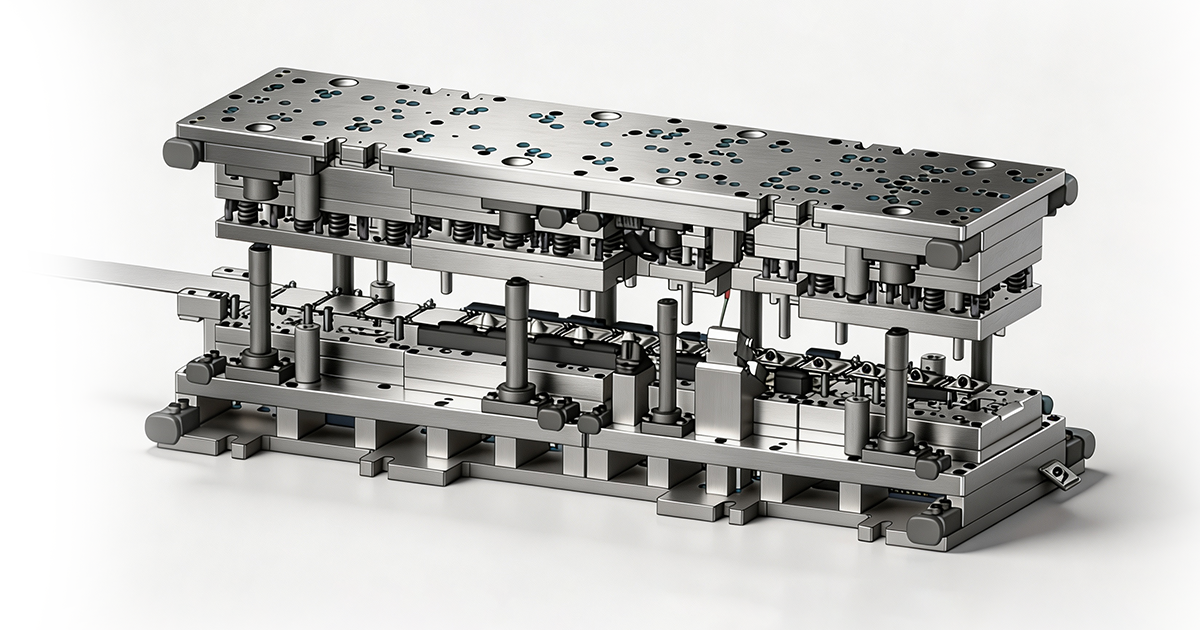
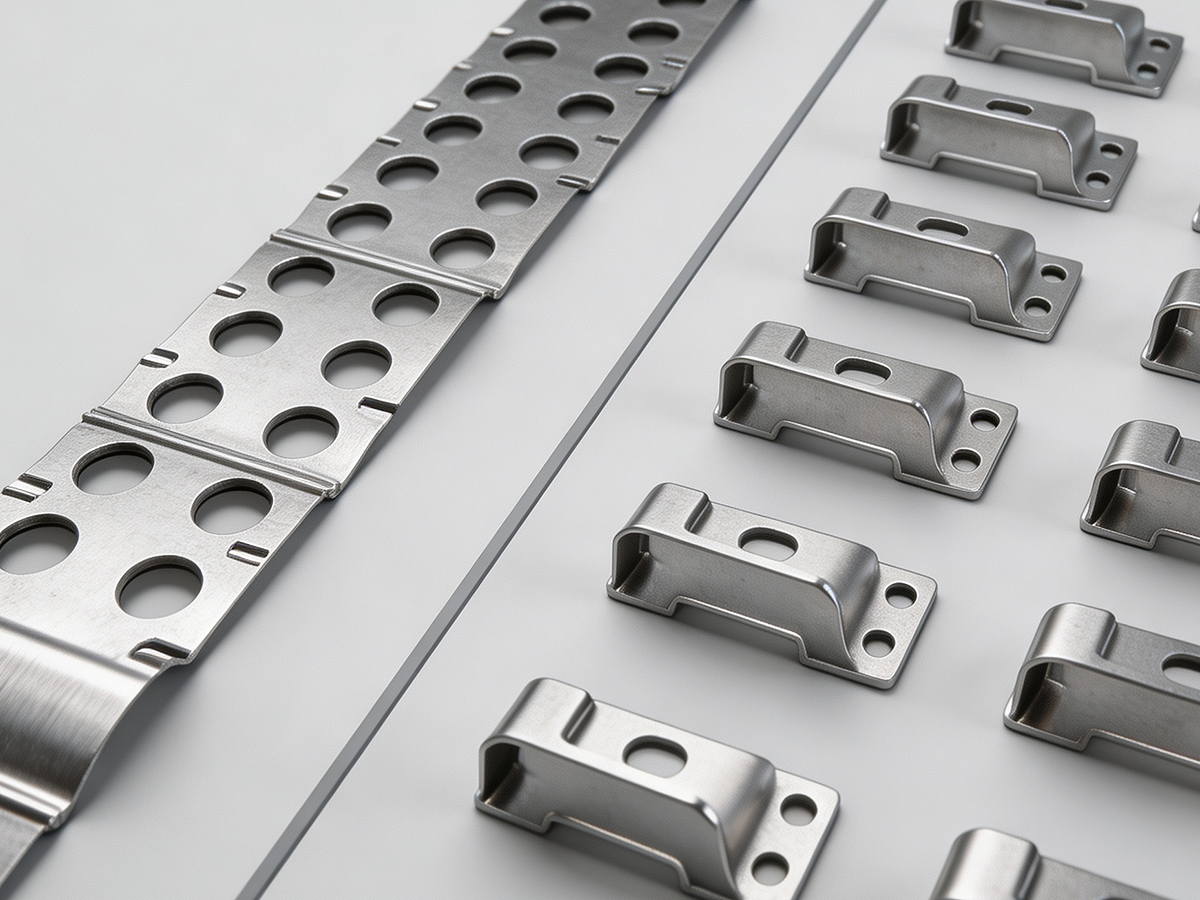
A progressive die is a multi-station stamping tool where a continuous metal strip moves through a series of stations — each one performing a different operation (blanking, piercing, bending, forming) — in a single press stroke cycle.
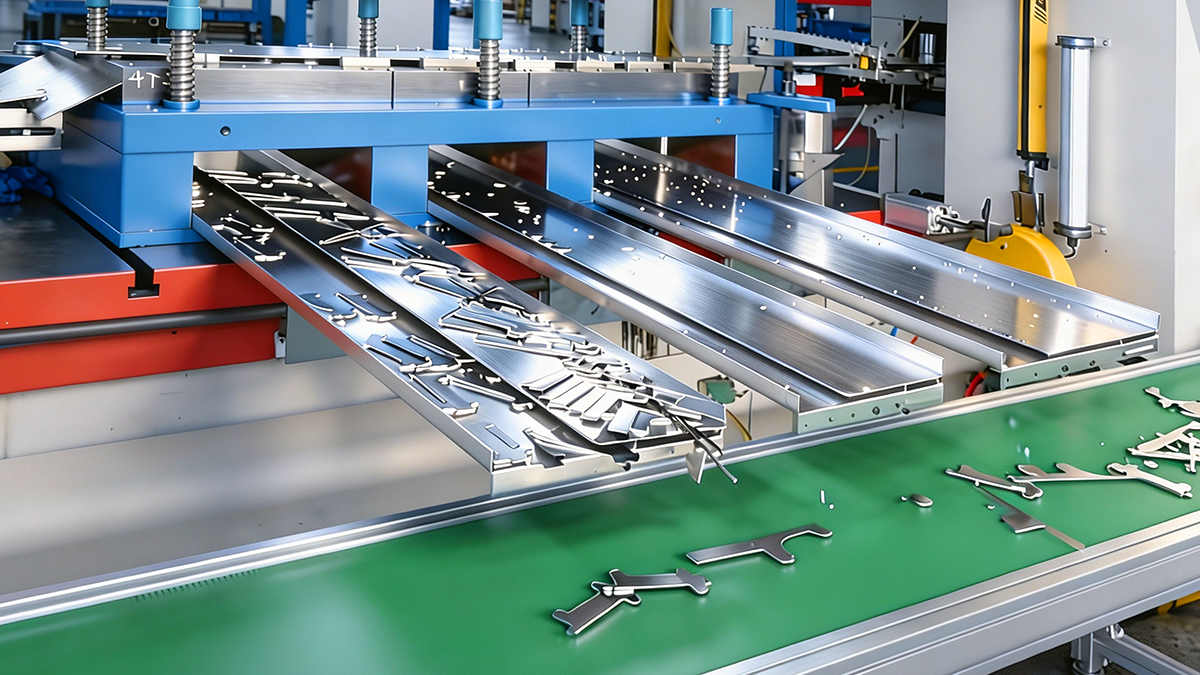
Key characteristics:
- Part remains attached to the carrier strip until the final station
- Strip is fed by a coil feeder with precise pitch control
- All stations operate simultaneously on each press stroke
- Typically 6–20+ stations depending on part complexity
- Best suited for small to medium-sized parts from coil stock
Advantages
- Speed: Cycle rates of 60–400+ strokes per minute — the fastest stamping method available
- Consistency: Every part is identical because the strip registration ensures precise alignment
- Low labor cost: One operator can manage multiple machines — fully automated strip feeding and part collection
- Material efficiency: Optimized strip nesting minimizes scrap (typically 20–40% scrap rate depending on part geometry)
- Compact footprint: Single-press operation requires less floor space than transfer systems
Limitations
- Part size restriction: Strip-fed designs work best for parts under ~300mm in length
- Cannot do deep draws: The strip limits how much material can flow into a draw — typically max draw depth of 30–50mm
- Higher tooling cost: Complex progressive dies with 15+ stations can cost $50,000–$300,000+
- Part must stay on strip: Operations that require part rotation or flipping are not possible
- Material constraints: Must use coil stock — not suitable for pre-cut blanks or thick plate
What Is a Transfer Die?
A transfer die uses a series of individual dies arranged in a press line (or a single large press with multiple stations). A mechanical or servo transfer system moves the part between stations — each part is completely separated from the raw material before the first operation.
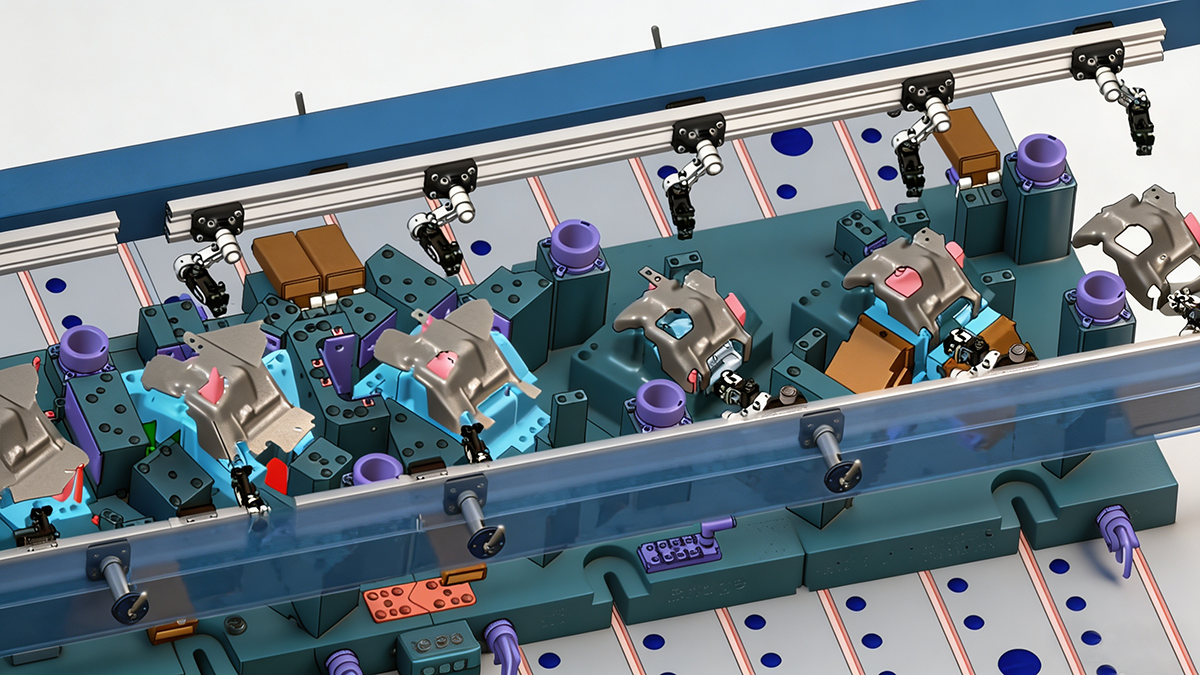
Key characteristics:
- Part is separated (blanked) in the first station, then transferred independently
- Mechanical transfer fingers, robots, or servo-driven systems move parts between stations
- Each station is an independent die — can be arranged in a single press or a press line
- Part can be rotated, flipped, or repositioned at any station
- Suitable for large, complex, and deep-drawn parts
Advantages
- Part size freedom: No strip constraint — can handle parts from 50mm to 2,000mm+ in length
- Deep drawing capability: Parts can be drawn to depths of 150mm or more (limited only by press stroke and material)
- 3D operations: Part rotation, trimming on all sides, curling, threading, and multi-directional forming are all possible
- Individual station flexibility: Add, remove, or modify stations without redesigning the entire die set
- Thick material handling: Works with sheet thicknesses from 0.5mm to 8mm+ — including pre-cut blanks
Limitations
- Slower cycle rate: Typical speeds of 10–30 strokes per minute due to transfer mechanism timing
- Higher capital cost: Press line with transfer equipment costs 2–5× more than a single progressive die press
- Larger footprint: Multiple presses or a long-bed press with transfer system requires significant floor space
- Part positioning tolerance: Transfer accuracy affects final part quality — requires precision grippers and alignment
- More complex automation: Transfer system design and maintenance add operational complexity
Side-by-Side Comparison
| Parameter | Progressive Die | Transfer Die |
|---|---|---|
| Cycle speed | 60–400+ SPM | 10–30 SPM |
| Part size range | Small to medium (<300mm) | Small to very large (2,000mm+) |
| Max draw depth | 30–50mm | 150mm+ |
| Material form | Coil stock only | Coil or pre-cut blanks |
| Material thickness | 0.3–3mm | 0.5–8mm+ |
| Part rotation/flipping | Not possible | Full 3D manipulation |
| Tooling cost | $15K–$300K+ | $50K–$500K+ |
| Equipment cost | Single press + feeder | Press line or long-bed press + transfer system |
| Floor space | Compact | Large |
| Operators needed | 1 per 2–3 machines | 1–2 per line |
| Scrap rate | 20–40% (strip skeleton) | 10–20% (optimized nesting) |
| Changeover time | Die change: 30–60 min | Line reconfiguration: 1–4 hours |
When to Choose Progressive Die
- ✅ High-volume, small-part production — connectors, terminals, brackets, clips, electrical contacts
- ✅ Speed is critical — production rates of 10,000–500,000+ parts per shift
- ✅ Simple to moderate part geometry — flat, bent, or shallow-formed parts
- ✅ Thin material (0.3–3mm) — coil-fed stamping on high-speed presses
- ✅ Automated production — minimal operator intervention, consistent quality
Typical applications: Connector pins, lead frames, electrical terminals, small brackets, spring contacts, fuse clips, automotive sensor housings, computer hard disk components
When to Choose Transfer Die
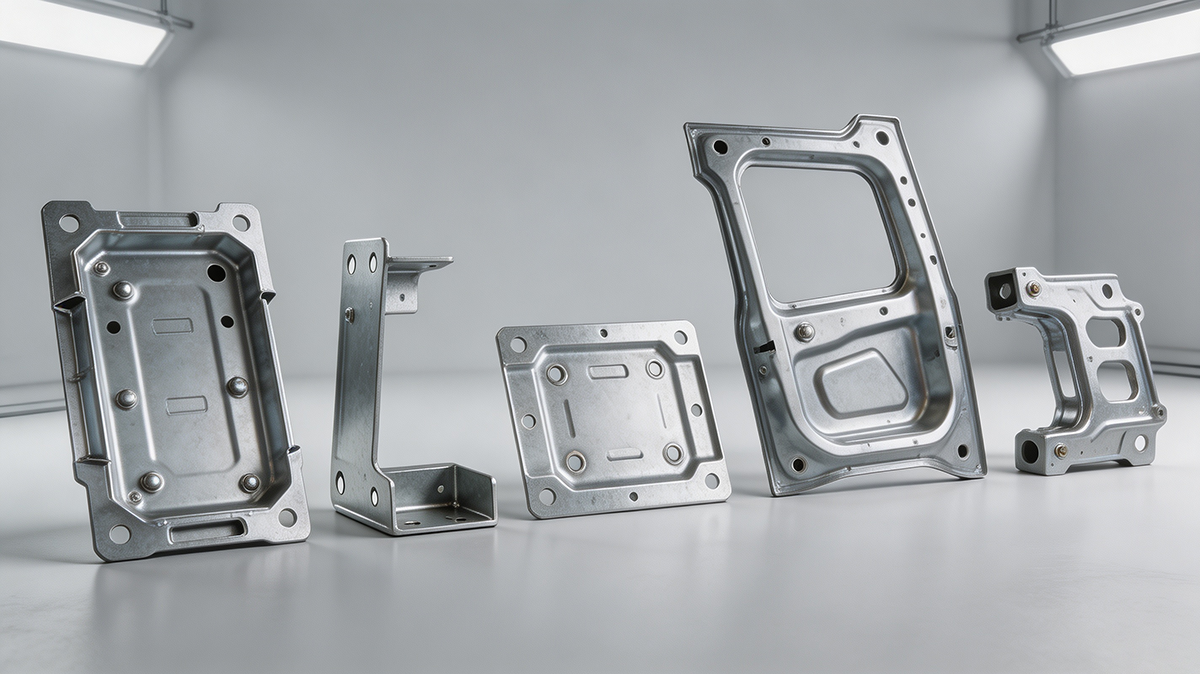
- ✅ Large parts — automotive body panels, appliance housings, structural components over 300mm
- ✅ Deep drawing required — cups, cans, shells, housings with draw depth >50mm
- ✅ Complex 3D geometry — parts that need rotation, reorientation, or multi-side trimming
- ✅ Thick material (3–8mm+) — structural parts, chassis components, heavy brackets
- ✅ Pre-cut blank processing — when material is not available in coil form
- ✅ Flexible production — smaller batches where station-by-station adjustment is needed
Typical applications: Automotive body panels, wheel hubs, engine brackets, deep-drawn motor housings, appliance tubs, stainless steel sinks, structural chassis components, EV battery enclosures
Cost Analysis: Total Production Economics
The die cost is only part of the equation. Here's how total cost-of-production compares at different volumes:
Break-even point: For most small-to-medium parts, progressive dies become more cost-effective above 50,000 parts per year. Below that volume, the higher per-part cycle time of a transfer die is offset by lower tooling investment. For large or deep-drawn parts, transfer dies are often the only practical choice regardless of volume.
Cost factors to consider:
- Tooling amortization: Progressive dies spread over millions of parts, driving per-part tooling cost to $0.01–0.10. Transfer dies amortize over fewer parts but the per-part cost is manageable at lower volumes.
- Material utilization: Transfer dies achieve 80–90% material utilization vs. 60–80% for progressive dies (due to strip skeleton waste).
- Labor: Progressive dies require less labor per part at high volumes. Transfer die lines may need more operators or robot programming.
- Maintenance: Progressive die maintenance is concentrated in one complex tool. Transfer die maintenance is distributed across multiple simpler stations — easier to repair individual stations without stopping the entire line.
Hybrid Approach: Transfer-Progressive Combination
For complex parts that need both high speed and 3D operations, some manufacturers use a hybrid approach:
- Progressive transfer dies: The part stays on a carrier strip through early stations (piercing, blanking) and is separated mid-process for transfer-based finishing operations (deep drawing, trimming, forming)
- Rotary transfer presses: Combine progressive die speed with multi-station indexing — parts move on a rotary table through 6–12 stations at 30–80 SPM
- In-die transfer: Some progressive dies include built-in transfer mechanisms for mid-process part flipping or reorientation
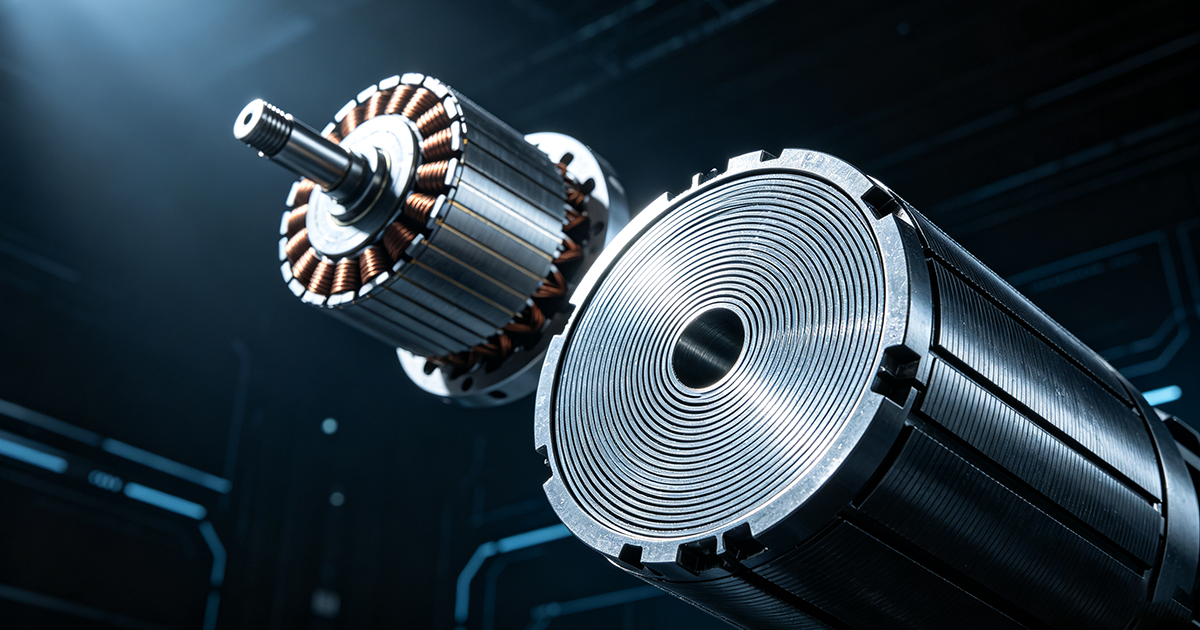
This hybrid strategy is increasingly common in EV motor core lamination and connector manufacturing where both speed and precision are essential.
Press Requirements for Each Method
Progressive Die Press
- Frame type: Straight side (preferred for precision) or high-rigidity C-frame for smaller parts
- Speed: High-speed presses (200–1,500 SPM) for electronics; standard speed (30–100 SPM) for automotive
- Feed system: Servo roll feeder or air feeder with ±0.05mm pitch accuracy
- Tonnage: 25–400 tons depending on part size and material thickness
- Features: Die protection sensors, tonnage monitoring, anti-vibration mounts
Transfer Die Press
- Frame type: Straight side or gap frame with extended bed (long-bed presses)
- Stroke: Long stroke length (200–500mm+) for deep draw operations
- Transfer system: Mechanical cam transfer, servo transfer, or multi-axis robot
- Tonnage: 60–2,000+ tons
- Features: Programmable transfer timing, blank loading system, part discharge conveyors
Decision Framework
Use this checklist to determine the right approach:
- What is your part size?
- Under 300mm → Progressive die possible
- Over 300mm → Transfer die recommended
- What is your draw depth?
- Under 30mm → Progressive die
- Over 50mm → Transfer die (non-negotiable)
- 30–50mm → Evaluate based on material and part geometry
- What is your annual volume?
- Over 200,000 parts → Progressive die for small parts
- Under 50,000 parts → Transfer die may be more cost-effective
- 50,000–200,000 → Evaluate total production economics
- Does the part require rotation or multi-side forming?
- Yes → Transfer die only
- No → Both methods are viable
- What is your material thickness?
- Under 3mm coil stock → Progressive die
- Over 3mm or pre-cut blanks → Transfer die
If you need help selecting the right press and die configuration, contact us for a free engineering consultation.
Taifeng Machinery: Your Stamping Solutions Partner
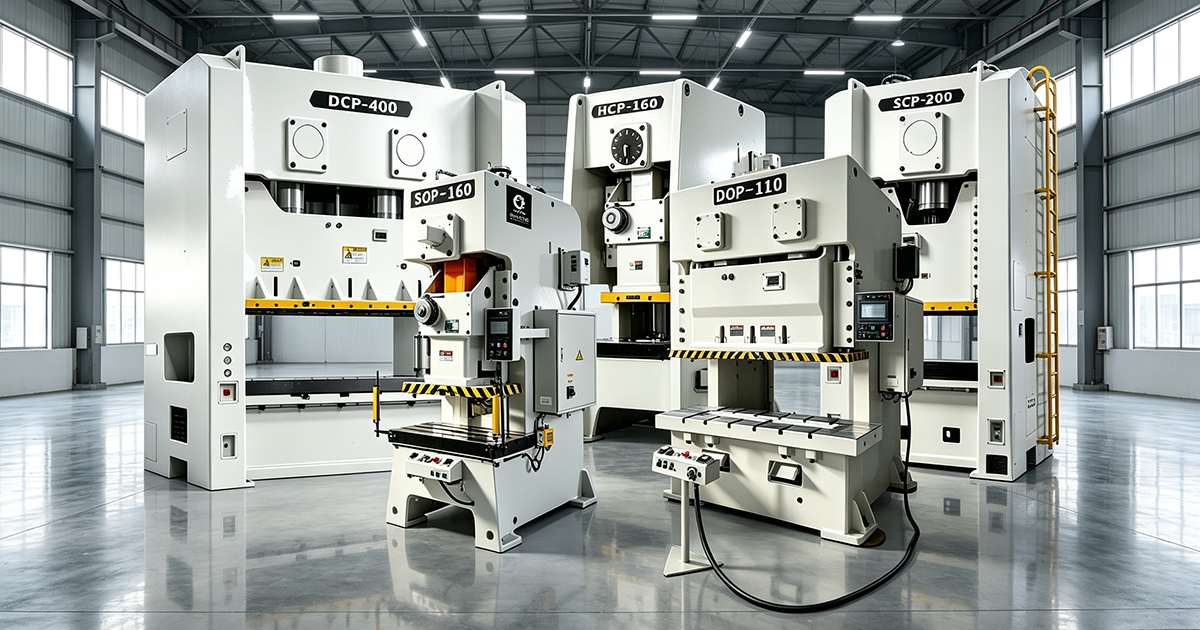
Taifeng Machinery manufactures precision stamping presses for both progressive die and transfer die applications. Our press range covers 25 tons to 600 tons with straight side and C-frame configurations optimized for high-speed and heavy-duty stamping.
Whether you need a high-speed press for progressive die connector stamping or a heavy-duty straight side press for transfer die automotive parts, our engineers can recommend the optimal configuration for your application.
- 📞 WhatsApp: +86 158 1350 2570
- 📧 Email: mxianglife@gmail.com
- 🌐 Visit: taifengpress.com